1 min read
What is The Marzipan Layer
What is the Marzipan Layer and how does it impact careers? The Marzipan Layer refers to the workers at the middle management level. They might be...
Insights to help leaders and organisations thrive and drive growth & inclusion.
Geraldine Gallacher Keynote Speaker
Speaker, podcaster, author and master coach.
Our resource hub for working parents, carers and managers navigating work-life balance.
Real stories from leaders driving inclusion & equity in today’s shifting world.
Fortnightly insights on leadership, equity & the future of work. For senior leaders & curious thinkers.
A monthly digest of the shifts shaping how we lead and work.
2 min read
Geraldine Gallacher | CEO
:
Sep 3, 2026, 2:14:37 PM
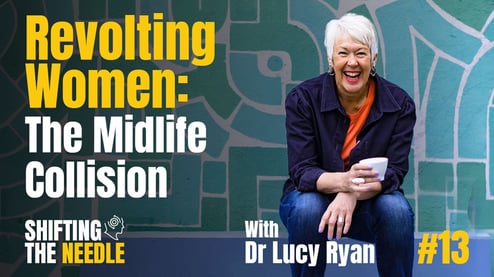
Dr Lucy Ryan on Shifting the Needle to discuss her award-winning book, Revolting Women.
Lucy traced her book back to her coaching practice, where she began noticing a pattern among midlife women, broadly those aged 45 to 65. Just at the point where they should have been stepping onto executive committees and boards, they were instead stepping sideways, stepping down, or leaving altogether. Curious, she turned to the academic literature and was startled by what she found: only three academic papers worldwide addressed professional women at midlife. She joked that there was more research on toenails. Convinced this represented a genuine gap, she pursued a PhD on the subject, only to face rejection after rejection from universities, who dismissed the topic as uninteresting and unpublishable. One professor reportedly told her outright that "no one wants to read about old women." Ryan persisted, eventually completing her doctorate. She initially shelved it for two years before the material's continued relevance pulled her back to turn it into a book.
Ryan explained that the term "Revolting Women" grew out of a chapter of her PhD inspired by the philosopher Julia Kristeva, who wrote about revolt and disgust, and specifically about women revolting against social norms. Publishers were initially wary of the title, worried it would alienate readers, but Ryan was prepared to self-publish rather than change it. It was eventually published, and the book went on to win an award in 2024. Ryan noted the title's clever double meaning, women revolting against being seen as revolting, and observed that some men are hesitant to be seen reading it in public for fear of the connotation.
At the heart of the book are three reasons Ryan identifies for why midlife women disproportionately exit corporate life: gendered ageism, the "midlife collision," and what she terms the "nature of revolt." Two findings from her interviews particularly surprised her. First, despite the turmoil many women described, 70% still wanted to step up into more senior roles, they were not choosing to leave so much as being pushed out by unsupportive systems. Second, mortality came up in every single interview she conducted, whether the women's own health, a partner's, a parent's, or simply turning 50, as a quiet but powerful force reshaping career decisions.
Ryan and Gallacher spent much of the conversation unpacking this term, sometimes more bluntly described by others as the "midlife clusterf**k." Ryan described it as a convergence of physical, emotional, and mental pressures unique to this life stage: menopause (which is significant for around 60% of women, severe for up to 20%, and barely noticeable for the rest), combined with caregiving for ageing parents, supporting teenage children through mental health struggles, relationship breakdowns, and financial strain. Because 92% of caregiving responsibility still falls to women, Ryan argued this collision lands far more heavily on them than on men, who face comparable pressures - andropause, ageing parents, parenting but far less often exit their careers as a result of the weighting of caring responsibilities on women.
Lucy acknowledged real progress in public conversations around menopause, but pointed to concerning statistics: female CEO numbers declining, female executive director numbers stagnant for nearly a decade. She described this as a historical pattern, when women near a tipping point of power, backlash follows.
The pair discussed how habit, short-termism, and vague notions of "hiring the best person for the job" quietly favour conventional (often male) candidates. Lucy stressed that diversity of experience, not just personality, drives better decision-making, and that resilience built through juggling caregiving and career is a leadership asset, not a liability.
Asked what a CEO genuinely committed to retaining experienced women should do first, Ryan didn't hesitate: start with curiosity. Ask women directly where and why they're exiting, identify existing role models, help women build supportive networks or "tribes," and only then move to systemic interventions such as job-sharing, flexible working, and gender-aware succession planning.
1 min read
What is the Marzipan Layer and how does it impact careers? The Marzipan Layer refers to the workers at the middle management level. They might be...
1 min read
In this explainer document, we break down the issues contributing to the lack of women in leadership roles in a straightforward and informative...
1 min read
Discover why empathy is the missing link to diversity and inclusion. Explore neuroscience, unconscious bias, and leadership strategies for real...