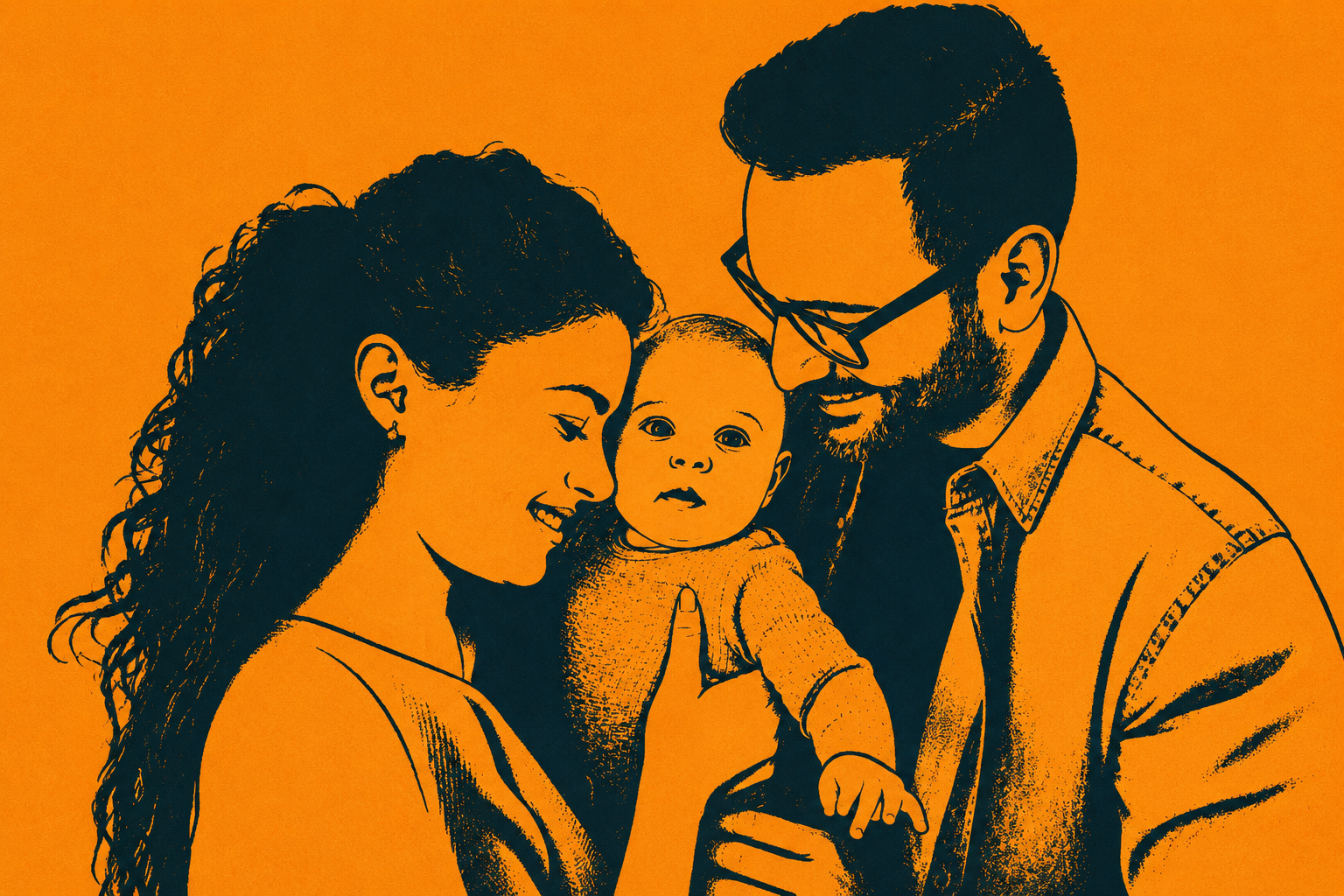
Launch of the Parental Fog Index 2026 in partnership with Working Families
The 2026 Parental Fog Index has launched in partnership with Working Families. Key findings show the appetite from working parents for support is...
Insights to help leaders and organisations thrive and drive growth & inclusion.
Geraldine Gallacher Keynote Speaker
Speaker, podcaster, author and master coach.
Our resource hub for working parents, carers and managers navigating work-life balance.
Real stories from leaders driving inclusion & equity in today’s shifting world.
Fortnightly insights on leadership, equity & the future of work. For senior leaders & curious thinkers.
3 min read
Michelle Weston | CRO and Executive Coach
:
Oct 20, 2026, 12:00:00 AM
Many returners stay but stop progressing. At which point, the value you've spent years building stops growing.
We've written 'From Return to Progression' for Talent and HR leaders. It explains why progression stalls after parental leave, what you can do about it and five measures that show whether your support is protecting the investment you've already made.
Download From Return to Progression: The Next Step in Parental Support
Careers often stall after maternity leave because the conditions around a person's progression change, even though their capability doesn't. Visibility drops, stretch work dries up and managers make assumptions about ambition. Working parents come back, perform well and stay. They just move up more slowly than before.
That's the central finding of From Return to Progression: The Next Step in Parental Support, a 2026 report for HR and Talent leaders from The Executive Coaching Consultancy (ECC). It argues that support for working parents needs to go beyond retention and a smooth return, to protecting long-term progression.
Retention tells you someone came back, it doesn't tell you whether their career is still on track. An employee can return from maternity, paternity or shared parental leave and stay for years while their progression slows.
"Return rates and retention tell you someone came back. They don't tell you whether they're still heading where they were before," says Emma Spitz, Master Coach and Co-CEO of ECC.
The cost tends to surface years later as a high performer resigning, a gap in the succession pipeline or a less diverse leadership team. Each one gets treated as a separate problem.
The ECC report describes a self-reinforcing loop. Managers, often with good intentions, offer returners less stretch work and less visibility, and assume their ambition has changed. Returners notice, adjust their expectations and stop putting themselves forward. The organisation reads that as proof it was right.
No single decision causes it. That's why it's hard to spot from the inside.
Wider research points the same way. Institute for Fiscal Studies analysis shows the gender hourly wage gap is over 10% before a first child and widens to 33% twelve years later.[1] In a US experiment, mothers were rated as less committed and less promotable than otherwise identical candidates.[2]
ECC's Closing the Partnership Gap research tracked 279 women across 18 international law firms with UK offices, all of whom received ECC's Parental Transition Coaching between 2017 and 2023. Using public professional records only, it followed their careers to February 2026.
19% of the coached women made partner. The Law Society benchmark is 13% for women and 28% for men.[3] So the coached group reached partner at nearly one and a half times the benchmark rate for women.
ECC is clear that this is an observational study showing association, not causation. What it does show is that a returner's trajectory isn't fixed, and that progression after maternity leave can be tracked for years.
Most organisations measure return rates, retention and wellbeing in the first months back. The ECC report argues that progression can diverge long after that, so HR needs measures that run for years. It proposes five:
Line managers decide who gets stretch work, visibility and sponsorship, so they shape a returner's progression more directly than any policy. In ECC's coachee feedback, 87% named their manager as the most important factor in a smooth return to work.
ECC's approach rests on three principles. Coaching starts before leave, not on return. It carries on well beyond the first weeks back, into the period when decisions about stretch work and promotion get made. And it coaches the line manager as well as the returner. ECC's Parental Transition Coaching runs in four phases, from four to eight weeks before leave to twelve months after return.
As more fathers take extended paternity or shared parental leave, the same pattern is starting to show.
"I see two things happen with dads on extended leave," says Paul Neville, Executive Coach at ECC. "Either he is concerned that his manager subconsciously starts questioning his commitment or ambition. Or he wants to properly share parenting with his partner, looks for a senior male role model at partner level who's made that work, and can't find one."
From return to progression sets out the evidence, the mechanisms behind stalled progression, five ways HR can protect returner progression and the full Closing the Partnership Gap methodology.
References
1. Institute for Fiscal Studies (2016), Gender wage gap grows year on year after childbirth as mothers in low-hours jobs see no wage progression.
2. Correll, S., Benard, S. and Paik, I. (2007), Getting a Job: Is There a Motherhood Penalty?, American Journal of Sociology.
3. Law Society of England and Wales (2025), Annual Statistics Report 2023: top-line report.
The 2026 Parental Fog Index has launched in partnership with Working Families. Key findings show the appetite from working parents for support is...
This strategy guide provides resources to plan your organisation’s journey towards becoming a family-friendly employer.
Discover what psychological safety is, why it drives high-performing teams, and how modern leaders can manage their emotional systems to lead with...