
Supporting Working Parents
Unlocking Talent
Insights to help leaders and organisations thrive and drive growth & inclusion.
Geraldine Gallacher Keynote Speaker
Speaker, podcaster, author and master coach.
Thriving at Work
Our resource hub for working parents, carers and managers navigating work-life balance.
Podcast
Real stories from leaders driving inclusion & equity in today’s shifting world.
Newsletters
Fortnightly insights on leadership, equity & the future of work. For senior leaders & curious thinkers.
A monthly digest of the shifts shaping how we lead and work.
PARENTAL TRANSITION & HUMAN CAPITAL
The human capital risk firms still underestimate.
Value isn't about today's output. It's about future output. Most firms track whether people return from parental leave. Almost none track whether their value keeps compounding afterwards.
13%of women reach partnership without parental transition support Source: Law Society, 2023 |
1 - 2Xannual salary to replace a senior professional - well past $1M at partner or MD level Source: Gallup, BigHand 2025 |
19%reach partnership after ECC coaching - 1.5x the unsupported rate Source: ECC, 279 professionals / 18 firms |
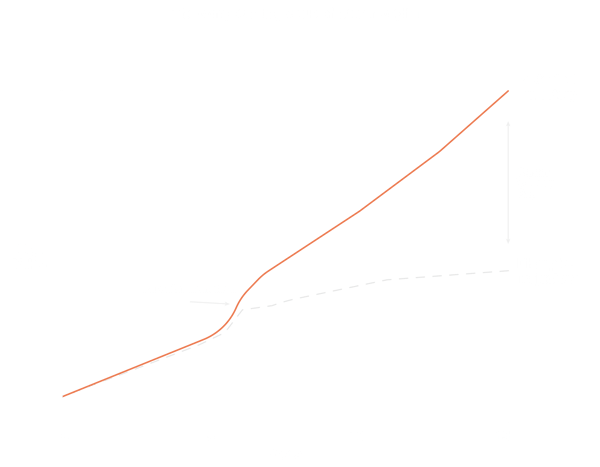
Two identical trajectories at the point of return, one continuing to compound, one subtly flattening. Same capability. Different outcome.
What's inside the report |
Four ways to see your talent problem differently
Discover the four reframes of this report - each reframe takes a question firms think they've already figured out and shows why the real answer sits somewhere else.
Part 1 : The Commercial Blind Spot
Firms measure salary, cover and return-to-work rates. Almost none measure whether the value someone creates keeps growing once they're back.
Part 2: Why Career Trajectories Change
Visibility, sponsorship and stretch-work shift before performance does - and organisations start responding to presence, not output.
Part 3 : Measuring the Hidden Cost
Tracked against 279 professionals across 18 firms, the effect shows up years later in promotion data - not sentiment scores.
Part 4: Protecting Human Capital
The firms getting this right manage parental transition as a talent risk, in order to protect career momentum.
If value is being lost, why don't organisations notice it?
Most firms measure the cost of leave. Almost none measure what happens after.
Take a lawyer returning from parental leave. Having a baby doesn't diminish their legal expertise, judgement or potential. But if they become less visible to decision-makers, get fewer stretch opportunities or lose sponsorship, their path to partnership can start to slow. The organisation hasn't lost their capability - it has quite simply stopped building on it.
Our research suggests something more important often happens after leave. Career momentum is shaped over months and years through progression, sponsorship and opportunity.
42%
Reduction in monthly earnings five years after a first birth. Capability didn't fall by 42%, the trajectory did.
Source: ONS, motherhood & employment earnings, 2014-2022
£124k*
Estimated lifetime earnings lost after a third birth (£65,618 after a first, £91,935 after a second).
Source: ONS, motherhood & employment earnings, 2014-2022
$1M+
Fully loaded cost of losing a third-year associate - higher again at senior associate counsel and partner.
Source: BigHand resourcing data, 2025
What is Franchise Capital?
Franchise Capital is the commercial value that resides in experienced professionals. It includes judgement, trusted client relationships, institutional knowledge, leadership capability and all of the hard-to-define abilities to operate effectively.
- The Human Capital Risk Firms Still Underestimate, Executive Coaching Consultancy
Capability doesn't disappear. Opportunity does.
And that's where years of investment stop translating into future value.
Four mechanisms compound over time. None of them are deliberate, but all of them are measurable.
Mechanism 1
Presence becomes a proxy for potential
Leadership systems reward visibility. During transition, visibility changes before capability does - and organisations start responding to reduced presence, not reduced performance.
Mechanism 2
Support becomes over-protection
Managers remove stretch assignments and delay progression conversations to be 'supportive'. These are exactly the opportunities that build visibility, sponsorship and advancement.
Mechanism 3
Ambition gets assumed, not discussed
Managers infer future ambition rather than asking. Ambition often hasn't changed, but expectations gradually adjust around assumptions that were never tested.
Mechanism 4
Progression rewards more than performance
Organisations believe they promote on performance alone. In reality, progression depends on accumulated visibility and sponsorship - and small interruptions compound into materially different long-term outcomes.
Not a leave-period effect
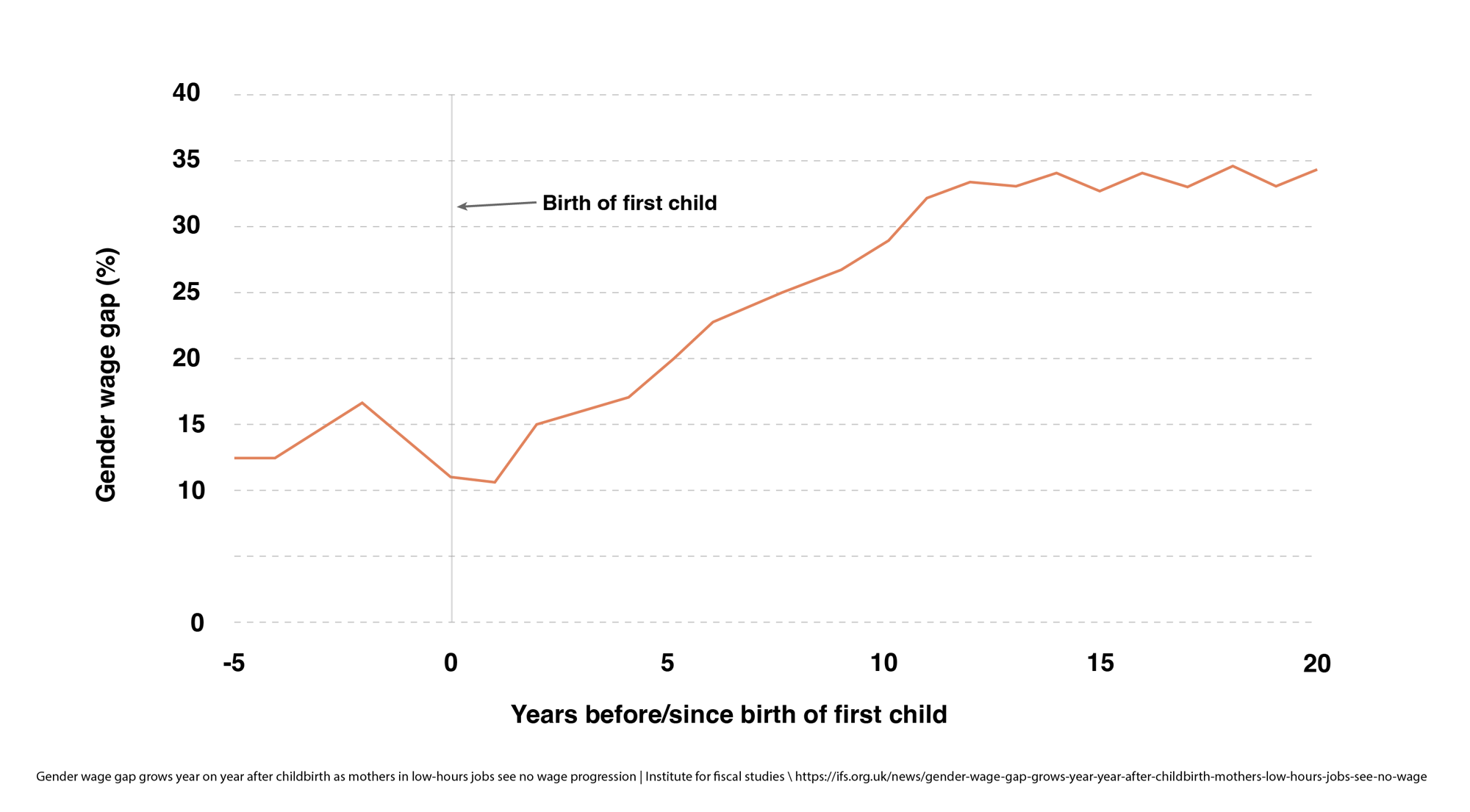
The pay gap doesn't close after parental leave. It widens for two decades.
According to the Institute for Fiscal Studies, the pay gap between mothers' and fathers' earnings widens steadily for around twenty years after the birth of a first child.
What the partnership data shows
Most firms can describe what happened during someone's leave. Far fewer can explain what happened to their trajectory in the years after. To find out, we tracked 279 women across 18 law firms who received parental transition coaching between 2017 and 2023, and followed their progress to partnership through to 2026.
Partnership is a useful outcome measure precisely because it's binary, economically rooted and committee-decided, not a sentiment score.
|
Observational study · correlation, not causation · same 279/18-firm dataset explained. |
- Five signals worth tracking
Five metrics your firm needs to start tracking today.
Retention tells you talent stayed. It doesn't tell you whether their value kept compounding. These are the five measures that do.
-
Promotion Velocity
How long does it take a parental leave taker to reach their next promotion milestone, compared with peers at the same level and practice area? -
Allocation of Stretch Work
Are returners continuing to receive the work, projects and client exposure that drive progression? -
Retention at Three and Five Years
Not whether someone returns - whether they're still engaged, progressing and building their career years later. -
Movement in potential ratings
Track manager-assessed potential pre-leave, at 12 months and at 24 months. The single most informative metric - it reveals shifts in perception not performance. -
Leadership Progression Outcomes
What proportion of parental leave takers reach senior leadership, partnership or succession pipelines, against a reliable comparator?
What changes once firms ask the right question |
How leading organisations protect career trajectory
|
They treat it as a talent risk moment They don't ask 'how will leave be covered' but instead "how will career momentum be maintained". |
They intervene before momentum is lost They don't wait for a missed promotion, disengagement or resignation. |
They equip managers to protect trajectory Managers shape progression more than any policy. Leading firms coach them to balance empathy with continued belief in potential. |
|
They measure progression, not just retention Retention keeps people in the building. Progression ensures they keep creating value. |
They measure what happens afterwards Promotion velocity, stretch opportunities and potential ratings - tracked over years, not months. |
They know retention isn't the finish line Not all loss is attrition. Employees can stay while their future leadership value quietly declines.
|
How parental transition coaching works |
We offer support that follows the whole transition, not just the leave.
Most coaching is measured by confidence and engagement scores. We wanted to know if it changed the numbers that matter to the business, so we tested it against the same partnership data. Emma Spitz, CEO of ECC "Does Coaching Work?"
The Cost of Losing the People You Spent a Decade Building |
The commercial companion to the full report - a shorter, numbers-first breakdown of Franchise capital and what it costs when career trajectory quietly stalls.
Get the full report, or talk to us about how leading firms are protecting career trajectory as a talent risk, not a wellbeing add-on.
© 2026 The Executive Coaching Consultancy. All Rights Reserved.