Skip to the main content.
Developing Effective Leaders

Executive coaching

Inclusive leadership


Supporting Working Parents

Parental transition coaching

Unlocking Talent

Insights and Research

Insights to help leaders and organisations thrive and drive growth & inclusion. 

Geraldine Gallacher Keynote Speaker

Speaker, podcaster, author and master coach. 


Thriving at Work

Work, Family and You

Our resource hub for working parents, carers and managers navigating work-life balance.

Podcast

Shifting the Needle

Real stories from leaders driving inclusion & equity in today’s shifting world.

Newsletters

On Balance

Fortnightly insights on leadership, equity & the future of work. For senior leaders & curious thinkers.

Research RoundUp

A monthly digest of the shifts shaping how we lead and work.

5 min read

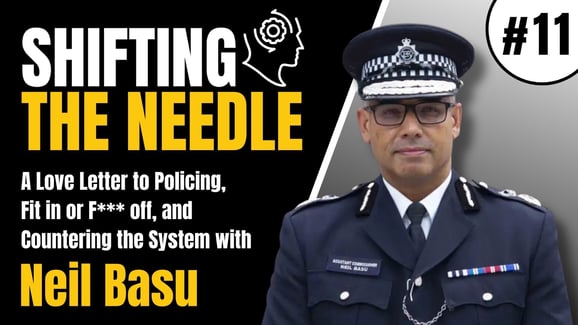
A Love Letter to Policing | Shifting the Needle Podcast with Neil Basu

A Love Letter to Policing | Shifting the Needle Podcast with Neil Basu

Shifting-The-Needle-Neil-Basu

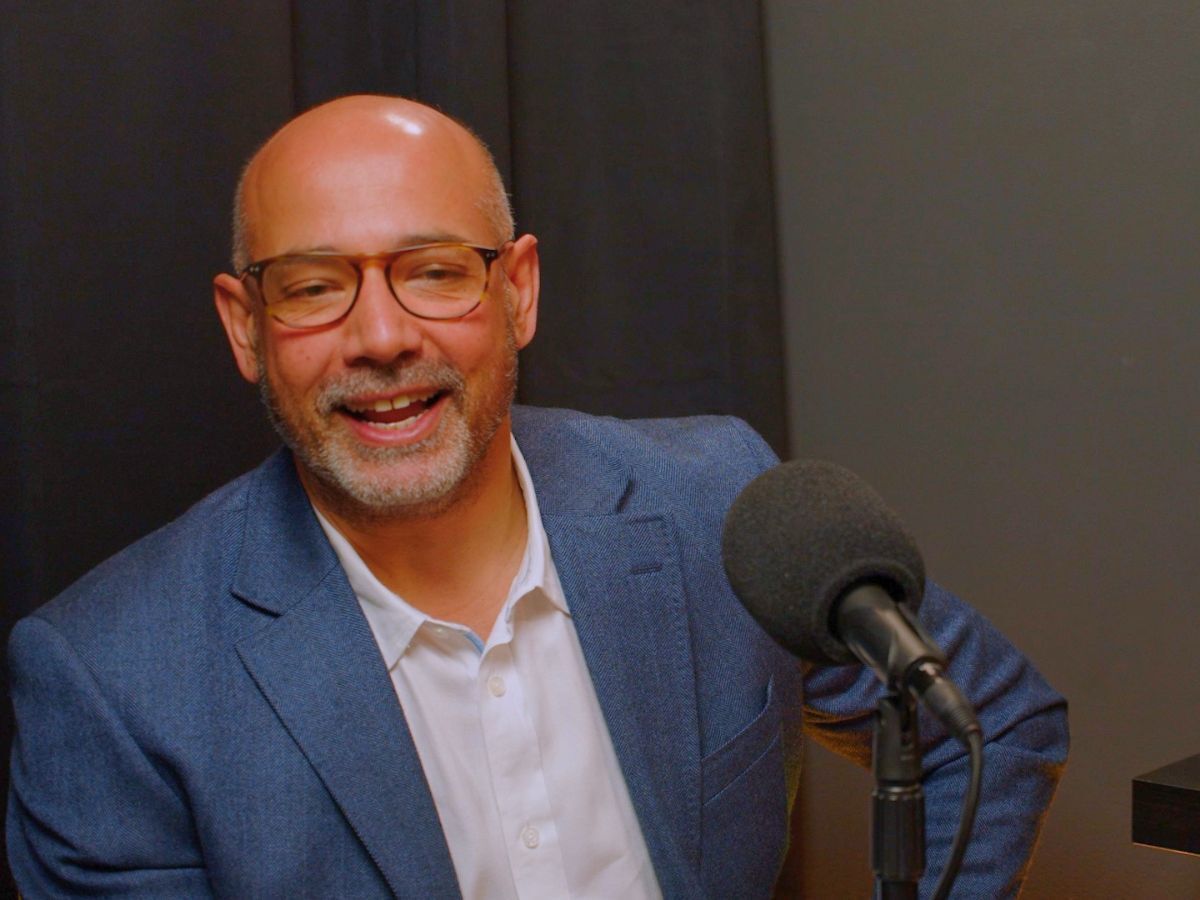
In this episode of Shifting the Needle, Geraldine is joined by Neil Basu, former Assistant Commissioner Specialist Operations for the Metropolitan Police Service and National Lead for Counter Terrorism.

When Neil Basu arrived at the memorial service for Stephen Lawrence in 2023, thirty years after the teenager's racist murder, he sat in a church listening to politicians promise change while the police service he had just left still refused to use the word "institutional." That moment, he says, crystallised everything his memoir Turmoil: 30 Years of Policing, Politics and Prejudice was written to say.

Basu joined Geraldine Gallagher on Shifting the Needle for a wide-ranging conversation that touched on the price of speaking up, what real leadership looks like, and why he is, by his own admission, and the Oxford English Dictionary's definition, "super woke."


Why He Wrote the Book

Q: What made you sit down and write a memoir?

Two things. First, there was a great deal left unsaid. Anyone who leaves a senior role is accustomed to being listened to and having the ability to make change, then one day you wake up staring at the walls. But the catalyst was unexpected: a letter, in among the usual hate mail, from a literary agent who had seen his final Channel 4 interview with Cathy Newman and believed he had a book in him.

The second reason was more personal. "It's really an apology, and at least an explanation to my children about where I was and why." Policing is a 24/7 emergency response, you are paid to put strangers' needs before your own family's, and that is a choice that carries a cost.

"I want particularly any police officer who hears this to know — I loved it. It wasn't a job, it was a vocation. This is a love letter to policing." But it is also an honest account of what the job can do to you, your relationships, and your sense of self — whether you're a constable or an assistant commissioner.


The Career That Was Ended by Politics

Q: You say you didn't retire entirely voluntarily. What happened?

Basu was the fourth officer of colour to reach the rank of assistant commissioner in the Metropolitan Police's nearly 200-year history. He was also the national lead for counter-terrorism from 2018 to 2021. His departure was shaped, he says, by two forces working in parallel.

The first was a vote. In December 2021, at the National Police Chiefs Council, he argued that policing should formally admit to institutional racism, apologise for it, and launch the race action plan all Chief Constables had signed up to after the murder of George Floyd. He lost — in a secret ballot. That was the day he decided to retire.

The second force was political. A newspaper headline — "Basu wouldn't give Boris a job" — had marked his card with Downing Street advisers years earlier, after he answered honestly that he wouldn't hire someone who had used language like "letterboxes" to describe Muslim women in niqab. The right-wing press labelled him the "super woke Head of Counter-Terrorism."

"There is a definition of woke in the Oxford English Dictionary. By that definition, I am super woke. Are you racially and socially alert to injustice in society? Yes. That's it."


On Institutional Racism: Why the Words Matter

The new commissioner, a friend and former boss, used "systemic" in place of "institutional" at Stephen Lawrence's memorial. Basu understood why: Suella Braverman was Home Secretary, and no candidate would have been appointed if they had made that admission. But the substitution, he argues, was political cover dressed as linguistic precision.

He had watched the same pattern with the Tony Sewell report commissioned after George Floyd's murder. "It was a classic Whitehall fudge, taking the heat out of a very emotional conversation." Most people never read past the foreword, which described the transatlantic slave trade as "the Caribbean experience." That single phrase, he says, rendered the report's better recommendations almost impossible to hear.


On Diversity: Why the Business Case Isn't Enough

Q: Does the business case for diversity work?

This is where Basu parts company with much conventional DEI thinking. He has lost faith in making the moral argument to adults who have had every opportunity to understand it and chosen not to. But he is also sceptical of the business case, not because the evidence isn't there (thirty years of McKinsey research suggests diverse boards outperform homogeneous ones), but because of how the argument can be weaponised.

"When I started it, I really thought it was changeable. But young women coming through are looking at corporate boards and thinking that system is not going to change."

His preferred frame is simpler: common sense and common decency. Policing serves 100% of the community. There are 145,000 officers. There are 70 million people. Community consent is not optional, it is the operational foundation of British policing. When communities don't trust the institution, witnesses don't come forward, intelligence dries up, and officers working in difficult situations find themselves filmed rather than supported.

Operation Trident, the unit he worked on tackling gang violence in London, proved the model. For ten years from 1998, by policing with the Black community rather than at it, they gained intelligence, secured witnesses, achieved convictions, and earned genuine confidence. "That was the first time and probably the last time in my career that I thought we were really making a difference."


On Leadership: The Style That Lasts

Q: How did your leadership philosophy develop?

Basu is thoughtful on this. He came up in banking before joining the police, a world of command-and-control, profit motivation, and what he describes as "small-c corruption." He watched it produce short-term results and long-term damage. He had colleagues who suffered nervous breakdowns under leaders who deliberately humiliated people in public, what he calls "shooting one chicken to scare the rest."

The alternative he observed, first from female leaders in business, then from Dame Cressida Dick early in her career, was collaborative, collegiate and compassionate. Not soft. Different.

"I wanted to make sure that what happened when I was not there, when I was not sitting in the office, was what I wanted to happen."

His model is adaptive leadership: knowing when a situation demands command (a riot, a crime in action, a major redundancy process) and when it demands something else. But he is firm on one thing: you can command compassionately. Ruthlessness is not a prerequisite for decisiveness.

He uses Alex Ferguson as an instructive counterexample. The hairdryer treatment worked for thirteen consecutive years. But the moment Ferguson left, it fell apart. "What do you leave behind you if that is your leadership style?"


On Prejudice: It's About Power, Not Feeling

Racism, misogyny and homophobia are all variants of the same thing: a power construct. People use difference as an isolating mechanism because it works. Bullies find weakness, and difference is the easiest perceived weakness to exploit, not because the person with difference is weak, but because the system rewards those who can define who belongs.

The double bind for women he describes is too assertive and you're aggressive; not assertive enough and you're not leadership material. He has watched women in policing try to adopt hyper-masculine behaviours because those were the visible role models, and seen it fail. Not because they weren't capable, but because the template was wrong.

The Michelle Obama formulation Geraldine raises captures it: "If you can't see it, you can't be it." Basu's career, the fourth officer of colour to reach his rank in 200 years, is both evidence of progress and a damning measure of how little.


What Comes Next

Basu retired in 2022, but has never stopped working. He sits on charity boards, runs his own advisory company, writes, speaks and advises on policing, national security, diversity and leadership. He has recently been approached to help develop ethics, diversity and equality training for civil servants and agency staff, curriculum work he describes as not very lucrative, but genuinely restorative.

He is also clear about what he won't be doing: going back.

"When people give me the emotional blackmail, you're too young, you could give more, I think, read the book. I've given enough."

He is, after three years, learning to enjoy what he calls "retired from policing but now with a much better work-life balance." He has watched the demand for Police Care UK's services, which supports physically and mentally damaged officers and their families, go through the roof. He has no desire to add to the statistics.

"I would like to live a long and happy life. Not a short, fulfilled, but broken one."


Neil Basu's book Turmoil: 30 Years of Policing, Politics and Prejudice is available now. He hosts The Crime Agents podcast. This episode of Shifting the Needle is available on all major podcast platforms.

Please click here to listen.

The Courage to Fight Forward | Shifting the Needle Podcast with Lesley Sackey

1 min read

The Courage to Fight Forward | Shifting the Needle Podcast with Lesley Sackey

Former Team GB boxer and European gold medalist Lesley Sackey and founder of Fight Forward, talks about her journey to success which is a powerful...

Read More
Why leaders who want to create psychological safety often can’t

1 min read

Why leaders who want to create psychological safety often can’t

Discover what psychological safety is, why it drives high-performing teams, and how modern leaders can manage their emotional systems to lead with...

Read More
Understanding Untapped Talent Pools: The Lost Leaders

3 min read

Understanding Untapped Talent Pools: The Lost Leaders

The Lost Leaders Talent Pool Explained Background Gender parity is stalling at best and at worst going backwards. In the UK alone, ECC’s research...

Read More